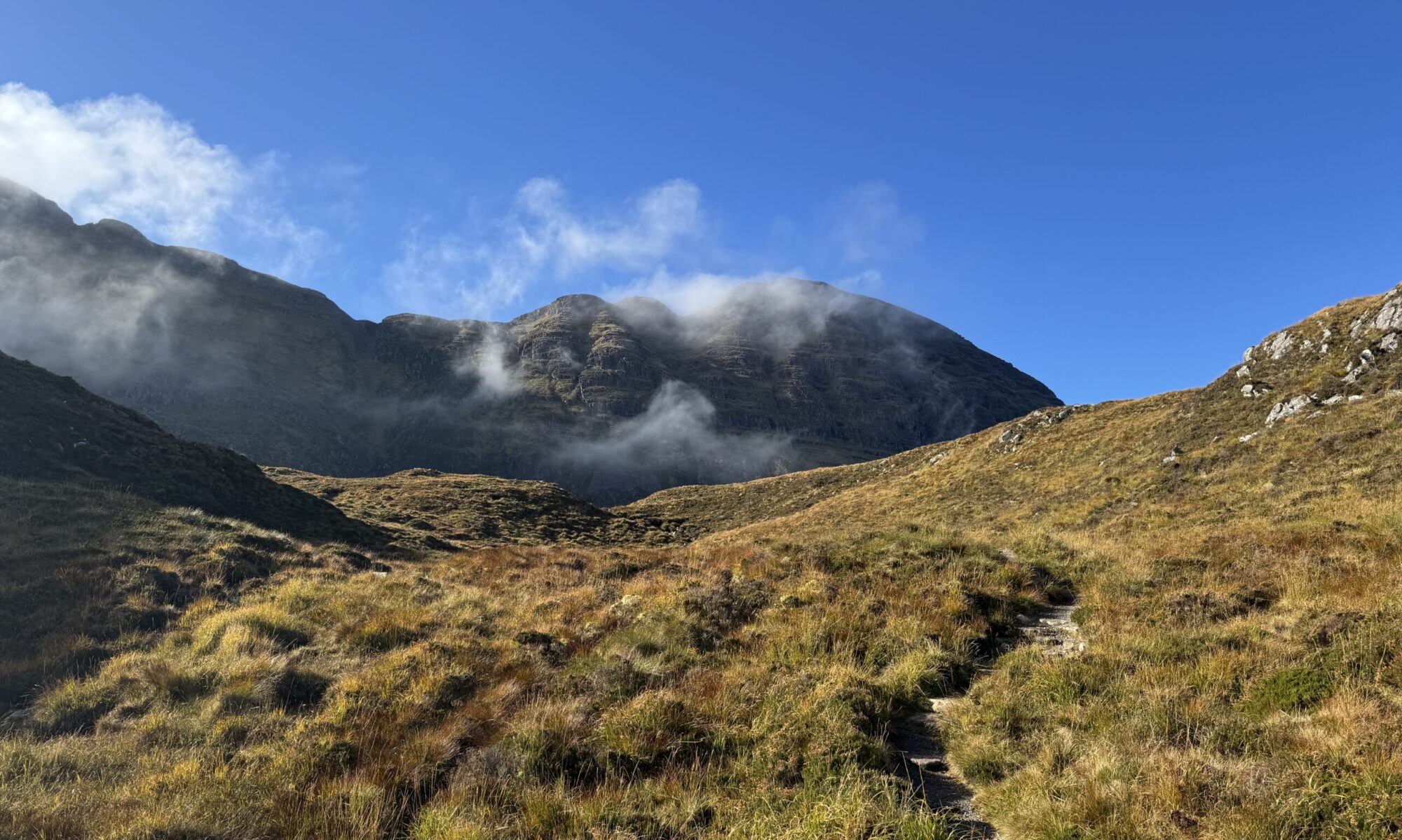
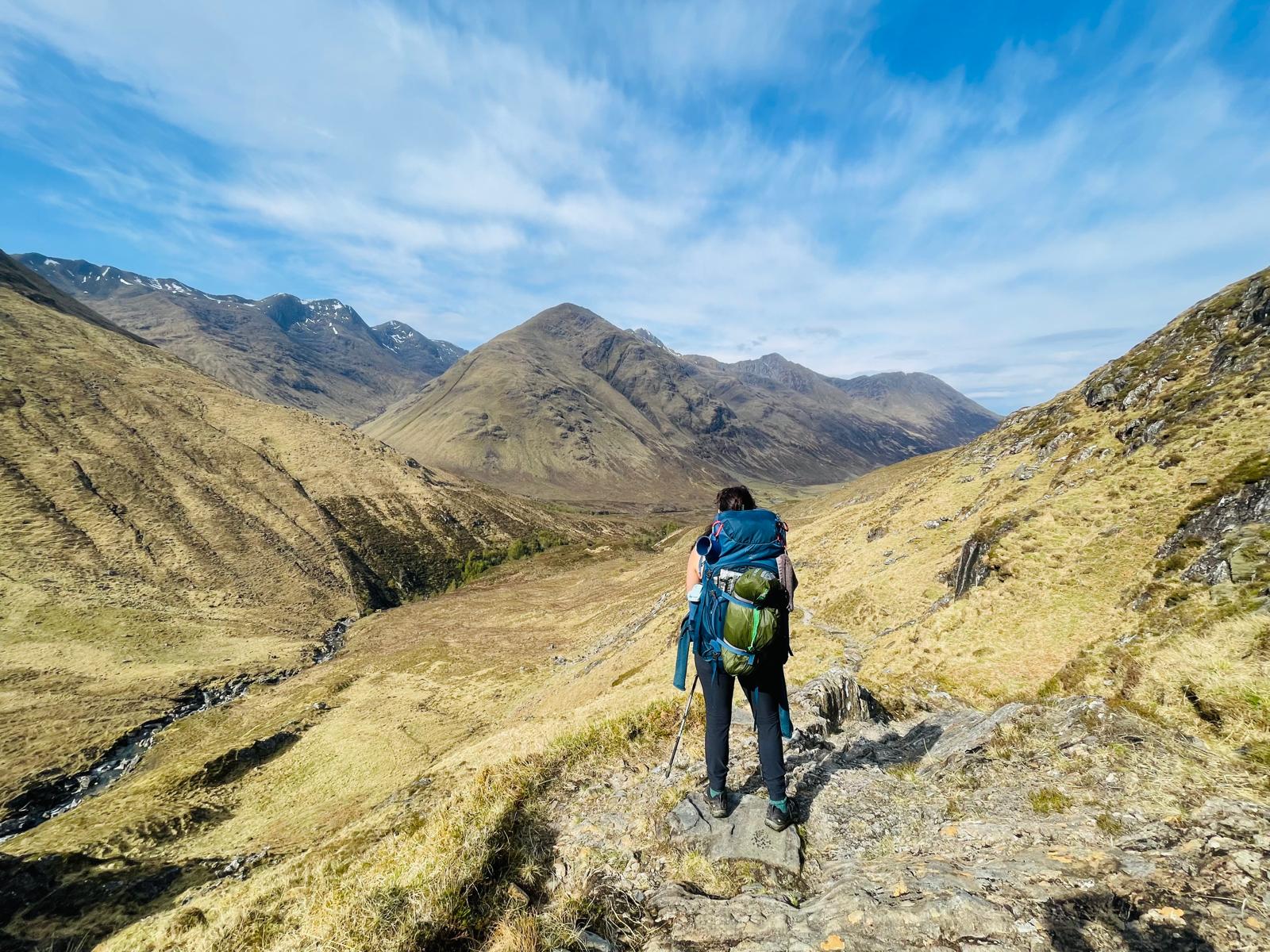
Transcribed from a voice note made on the last leg of the Affric- Kintail way, last april, after a couple of days off the grid.
My world is what I make of it.
Or maybe more precisely—the world I live in (with you) is the world I can describe. And what I can’t say, what I can’t name or describe, is my world and only mine to experience.
I keep thinking since my first read of Ludwig Wittgenstein’s Tractatus Logico-Philosophicus—that the limits of our language are the limits of our world. Yet this world is not a shared world. Because what he says is “The world is my world: this is manifest in the fact that the limits of language (of that language which alone I understand) mean the limits of my world.” (5.62, 1921)
Because if that’s true, then each of us is, in a way, creating a world through their use of language, how you choose to talk about things to others and to yourself. Not from nothing, but from how we define things, how we name them, how we organise experience. And what value we give them. How they stand in our knowledge organisation, pin our mind castles. These definitions don’t come from nowhere.
They’re inherited—built up over time, through culture, through history.
Almost like an organic system. Not designed, but grown. So the “rules” of the world—what is right, what is wrong, what makes sense—they’re not absolute in the way we often assume. They’re the result of long processes of thinking, of conversing, of exploring.
And maybe that’s why the structures that institutionalised religions offer are so attractive to some. Not just as belief systems, but as shared frameworks— ways of interpreting the world so that people could feel that they share a thought, a form of grounding in shared experience. In this way they can act together, exist together. A language for reality to be shared from the subjective experience.
But now it feels like those shared rules are breaking down faster than ever before. Or maybe not breaking—but being replaced, or being distorted, by forces that aren’t really our awareness, our direct experience. And so we start questioning everything again. And this is where it gets vague, as where are the boundaries of this change, and where should we set it free.
Because I was thinking about that idea—like when someone says “God is dead,”
like Friedrich Nietzsche did— it’s not just about belief disappearing. It’s about a whole system of meaning collapsing. What we do now feels like trying to revive that system—
or replace it—using the same kinds of thinking that created it in the first place. But something doesn’t quite work. Because when you’re out here—in nature— everything feels connected in a way that doesn’t need explanation. It just is. It’s immediate. It’s organic.

And then the mind comes in and starts categorising, naming, structuring— trying to pin it down. Then in doing that, it creates a different kind of reality. A double piramidal structure where things, people, feelings, etc. are either above or under others, with an apex as goodness and the other as badness/evilness. This structure is a rigid one. A more artificial one. I think that’s the tension.
The systems society has built—the concepts, the philosophies, the language— were useful once. Maybe even necessary. But some of them surely no longer fit the way the world’s being currently experience. They’ve become… obsolete, in many ways. And yet some still think through them. Society still relies on them to define what is real, what is true. Inconsistent and outdated.
So maybe the problem isn’t just the world changing—but that our ways of thinking haven’t caught up with the shifting that has already happen. ~There is not way to return to the past. What is known, can’t be unknown.
